
In-Depth Economic Analysis

Exploring how prices transform decisions and lifestyles

In this section you will find detailed analyses that explore the relationship between price variations and changes in daily life patterns. Each article combines statistical data with contextual interpretations, providing comprehensive understanding of complex economic phenomena.

Our analyses go beyond reporting numerical changes. We investigate underlying causes, identify emerging trends and evaluate short and long-term implications for different segments of the Argentine population.

Inflation impact

How Inflation Influences Daily Habits

Persistent inflation not only erodes purchasing power. It generates profound transformations in how people plan purchases, choose products and prioritize expenses. This analysis examines adaptation patterns in different socioeconomic groups...

Introduction: Beyond the Numbers

When INDEC announces a monthly inflation of 6%, the figure seems abstract. But behind that percentage hide thousands of modified family decisions, altered consumption habits and developed economic survival strategies. Inflation is a statistical phenomenon, but its impact is deeply personal and heterogeneous.

In Argentina, where inflation has been a constant for decades, families have developed sophisticated adaptation mechanisms. These mechanisms vary according to income level, family composition, geographic location and access to information and financial tools.

Differentiated Effects by Socioeconomic Segment

The impact of inflation is not uniform. Low-income families allocate between 45% and 55% of their income to food, while high-income families allocate between 20% and 25%. This means that a 10% increase in food prices hits the former much harder.

Middle-upper income families can diversify their consumption portfolio, changing brands or shopping channels without compromising nutritional quality. Lower-income families face more drastic decisions: reduce quantities, eliminate products or substitute with lower nutritional quality alternatives.

Changes in Shopping Patterns

Sustained inflation has generated observable changes in purchasing behaviors. A 34% increase in pre-purchase planning is recorded, with more families preparing detailed lists and comparing prices before leaving home. The use of price comparison applications has increased by 67% in the last two years.

Migration toward wholesale shopping formats is also observed. Large monthly purchases at wholesale supermarkets have grown by 28%, while daily proximity purchases have decreased by 15%. This strategy allows taking advantage of wholesale prices but requires initial capital and storage capacity.

Modification of Consumption Basket

Product substitution has become a widespread practice. 72% of Argentine families admit having changed brands in at least five product categories during the last year. 43% report having completely eliminated certain products considered non-essential from their regular consumption.

Animal protein is particularly vulnerable. Beef consumption has decreased by 18% in the last three years, while chicken consumption has increased by 23% and legumes by 31%. These substitutions reflect searches for more economical proteins, although not always nutritionally equivalent.

Savings and Optimization Strategies

Families develop increasingly sophisticated strategies. 56% use multiple payment methods to maximize discounts and refunds. 48% compare prices in at least three establishments before making significant purchases. 39% participate in community purchases or cooperatives to access wholesale prices.

An increase in home meal preparation is also observed. Spending on delivery and prepared meals has decreased by 22%, while purchases of basic ingredients for home cooking have increased by 17%. This strategy reduces costs but increases time dedicated to food preparation.

Psychological Impact and Future Planning

Constant inflation generates measurable economic anxiety. 64% of Argentinians report frequent concern about money, and 51% admit that economic uncertainty affects their emotional wellbeing. This anxiety influences long-term decisions, with 47% postponing plans to buy a home or car.

Family planning is also affected. 38% of young couples recognize that inflation is an important factor in their decisions about having children or postponing parenthood. Economic insecurity permeates fundamental life decisions.

Conclusions and Perspectives

Inflation is more than a macroeconomic indicator. It is a force that reshapes behaviors, priorities and life projects. The adaptation strategies developed by Argentine families demonstrate resilience and creativity, but also evidence the social and emotional cost of persistent economic instability.

Understanding these patterns is fundamental for designing effective public policies and for each family to make informed decisions about how to protect their economic wellbeing in an inflationary context.
Housing costs

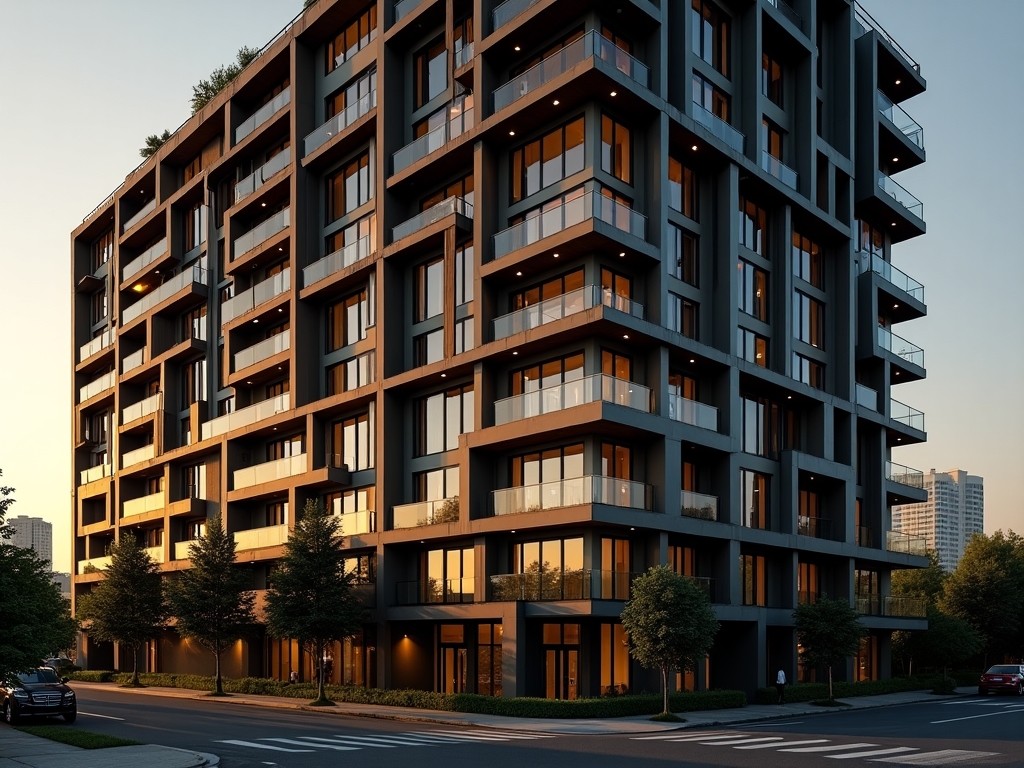
Housing Price Comparison and Their Influence on Quality of Life

Housing costs represent between 25% and 40% of family income in Argentine urban areas. This proportion, considered high by international standards, is generating significant changes in residential decisions and life patterns...

The Weight of Housing in Family Budget

Housing is the most significant expense for most Argentine families. In Bahía Blanca, the average rent for a two-bedroom apartment in the central area reaches $180,000 per month, representing between 35% and 45% of a middle-income professional's salary. This proportion far exceeds the 30% recommended by financial experts.

The situation is more complex for those seeking to buy. The average price per square meter in desirable areas of Bahía Blanca is located at $2,500 USD, requiring savings equivalent to 8-10 years of income for a middle-class family that allocates 20% of their income to savings, without considering inflation.

Regional Differences Within the City

Bahía Blanca presents significant price variations by area. The center and neighborhoods like Villa Mitre show values 40% higher than peripheral areas like Villa Rosas or Northwest. This difference not only reflects amenities and services, but also access to employment, education and transportation.

A rent in the central area can cost $180,000, while in peripheral areas the same living space is obtained for $110,000. However, the difference must be evaluated considering additional transportation costs, commute time and access to services, which can partially offset the initial savings.

Impact on Life Decisions

High housing costs are modifying fundamental decisions. 34% of young professionals in Bahía Blanca report having postponed becoming independent from their parental home due to rental costs. The average age of independence has increased from 24 to 27 years in the last decade.

Changes in household composition are also observed. 28% of people between 25 and 35 years old share housing with non-relatives to reduce costs, a practice that was less common a decade ago. This trend reflects adaptation strategies but also poses challenges of privacy and coexistence.

Relocation and Residential Mobility

The price gap is generating observable population movements. A 22% increase in the population of peripheral neighborhoods has been recorded in the last five years, while central areas experience more moderate growth of 8%. This urban dispersion generates challenges for transportation and service planning.

Simultaneously, a phenomenon of workers choosing to live in smaller cities near Bahía Blanca is observed, taking advantage of remote work. Places like Punta Alta or Coronel Pringles show increases in professional population, seeking lower housing costs without completely giving up employment opportunities in the larger city.

Quality of Life and Living Space

High costs are reducing the average living space. Young families access apartments 18% smaller than a decade ago for the same budget. An apartment that in 2015 offered 75m² now offers 62m² for the same relative cost to income.

This space reduction has implications for quality of life, especially in remote work contexts where the home must also function as an office. 41% of remote workers report dissatisfaction with their home workspace, citing lack of dedicated space as the main problem.

Comparison with Other Argentine Cities

Bahía Blanca presents intermediate prices in the national context. Buenos Aires Capital shows values 65% higher, Córdoba Capital 30% higher, while smaller cities in the province like Tres Arroyos or Olavarría present values 25-35% lower than Bahía Blanca.

This intermediate position makes Bahía Blanca an attractive option for professionals seeking employment opportunities without the extreme costs of large capitals. However, the salary gap with Buenos Aires is greater than the housing cost gap, generating a competitiveness challenge to attract talent.

Housing Access Strategies

Families develop various strategies to access housing. 31% resort to family help for initial rental or purchase deposit. 24% opt for UVA mortgage loans, despite uncertainty about future adjustments. 19% participate in housing cooperatives or self-construction programs.

An increase in multigenerational housing is also observed. 16% of Argentine families now include three generations under one roof, a proportion that has grown from 11% in 2015. This trend allows cost sharing but requires adjustments in family dynamics and privacy expectations.

Future Perspectives

Projections suggest that housing costs will continue to be a significant challenge. New housing construction is not keeping pace with demand, especially in affordable price segments. A deficit of 35,000 homes is estimated in Bahía Blanca and surroundings for the next five years.

This situation requires public policy responses that include construction incentives, rental market regulation and mortgage credit access programs. Meanwhile, families will continue developing creative strategies to balance housing costs with quality of life.

Fuel prices

Role of Fuel Prices in Transportation Habit Changes

Gasoline and diesel prices have experienced increases exceeding 150% in real terms over the last three years. This increase is generating a significant transformation in how people commute, with environmental, social and economic implications...

Price Evolution and Context

In January 2026, the liter of super gasoline in Bahía Blanca reaches $1,350, while premium diesel is located at $1,280. These values represent increases of 164% and 158% respectively since January 2023. While part of this increase responds to general inflation, fuels have increased above the consumer price index, evidencing specific pressures from the energy sector.

For an average driver who travels 1,200 kilometers monthly with a vehicle of average consumption (11 liters/100km), the monthly fuel expense reaches approximately $17,800. This amount represents between 8% and 12% of a middle-class family's income, a proportion that has grown significantly in recent years.

Impact on Personal Car Use

High prices are modifying car use patterns. 47% of vehicle owners in Bahía Blanca report having reduced their use by 30% or more during the last year. This reduction manifests mainly in non-essential trips: weekend outings, recreational activities and social visits.

A change in trip planning is also observed. 58% of drivers now group multiple activities in a single trip to optimize fuel. 43% have modified their usual routes to minimize distances, even if this implies denser traffic. These adaptations demonstrate the price sensitivity that mobility behavior has developed.

Migration toward Public Transportation

Public transportation has experienced a significant resurgence. Bahía Blanca's urban bus system recorded a 23% increase in passengers between 2023 and 2025. This growth contrasts with the declining trend of the previous decade, when individual motorization had reduced public transportation use.

However, this demand increase presents challenges. Public transportation infrastructure has not grown at the same pace, generating capacity problems during peak hours. 34% of users report dissatisfaction with frequencies and waiting times, suggesting the need for investment in service expansion.

Alternative Mobility Adoption

Bicycles have experienced a notable boom. Bicycle sales in Bahía Blanca increased by 67% between 2023 and 2025. The use of bicycles for work commutes grew by 41%, especially among people living less than 5 kilometers from their workplace.

This trend has generated pressure for cycling infrastructure. 52% of cyclists consider that the lack of safe bike lanes is the main obstacle for greater use of this means of transportation. Municipal investments in bike lanes have increased, but still do not reach the growing demand.

Electric and Hybrid Vehicles

Despite high acquisition prices, electric and hybrid vehicles are gaining interest. Hybrid vehicle sales in Argentina grew by 89% in 2025, although from a small base. In Bahía Blanca, approximately 450 electric or hybrid vehicles are estimated to circulate, an increase of 135% compared to 2023.

The economic calculation is attractive for high-mileage users. An electric vehicle can travel 100 kilometers with electricity equivalent to $800, while a gasoline vehicle would require $1,500. However, the initial investment and limited charging infrastructure remain significant barriers.

Impact on Logistics and Product Prices

Fuel prices not only affect personal mobility. Goods transportation represents between 8% and 15% of the final cost of products, depending on distances and product type. Diesel increases inevitably transfer to prices of food, construction materials and consumer goods.

This indirect effect means that even people without a car feel the impact of fuel prices on their family budget. A correlation analysis shows that each 10% increase in diesel prices generates an average increase of 2.3% in food prices within the following three months.

Residential Location Decisions

Fuel costs are influencing decisions about where to live. 27% of people who changed housing in 2025 cited reducing commute distances as an important factor in their choice. Proximity to work, schools and services has become a growing valuation criterion.

This trend is generating a slight reversal of suburbanization. Central neighborhoods, which had experienced relative depopulation, now show renewed interest, especially among young professionals who prioritize reducing transportation needs. This dynamic has implications for long-term urban planning.

Carpooling and Shared Transportation

Vehicle sharing has grown significantly. 31% of workers who commute by car report sharing rides with colleagues or neighbors at least part of the time. Digital carpooling platforms have facilitated coordination, reducing both costs and vehicular congestion.

This practice generates average savings of 60% in fuel costs for participants, in addition to social and environmental benefits. However, it requires coordination of schedules and routes, which is not always compatible with desired work flexibility.

Perspectives and Sustainability

The transformation of transportation habits induced by fuel prices presents opportunities for a more sustainable mobility system. The reduction in individual car use, the increase in public transportation and the adoption of bicycles contribute to environmental objectives.

However, this transition must be managed with adequate public policies that ensure accessibility and equity. Mobility should not become a privilege of those who can afford expensive fuel or live near activity centers. Sustained investments in accessible transportation alternatives for all socioeconomic segments are required.